
On 3 August 2026, Budakov Films successfully organised the Bulgarian Final National Conference of the Co.De. project, hosted by New Bulgarian University in Sofia. The five-hour conference represented an important final-stage dissemination, exploitation and sustainability milestone for the European project, bringing its results directly to the Bulgarian educational community.
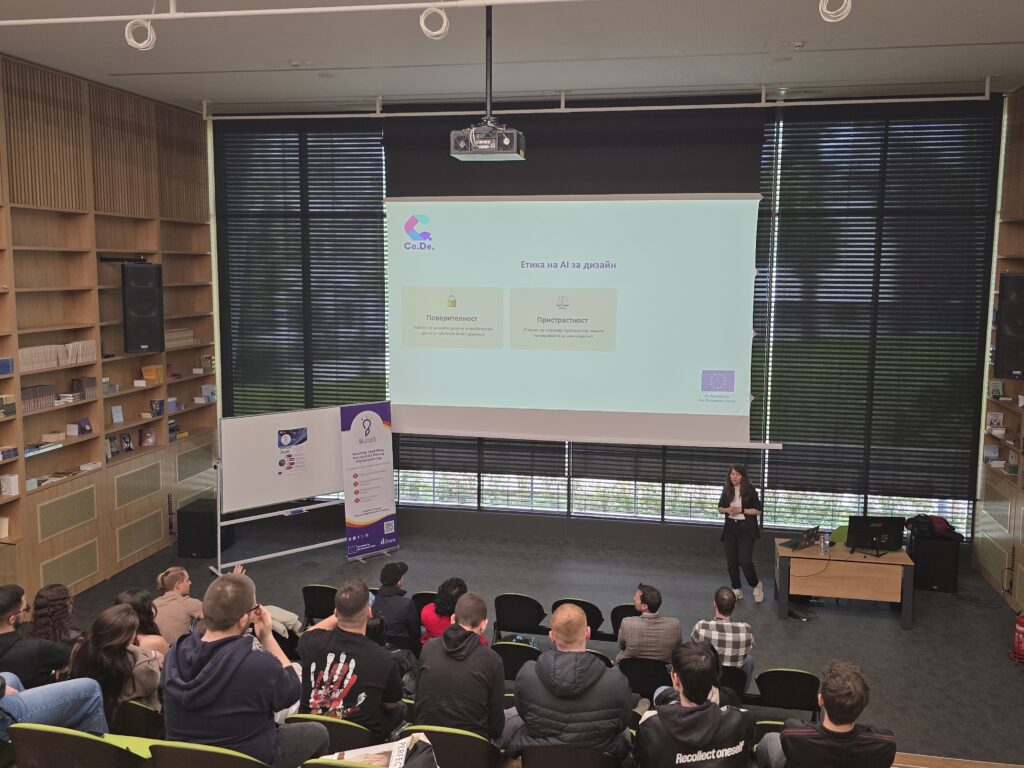
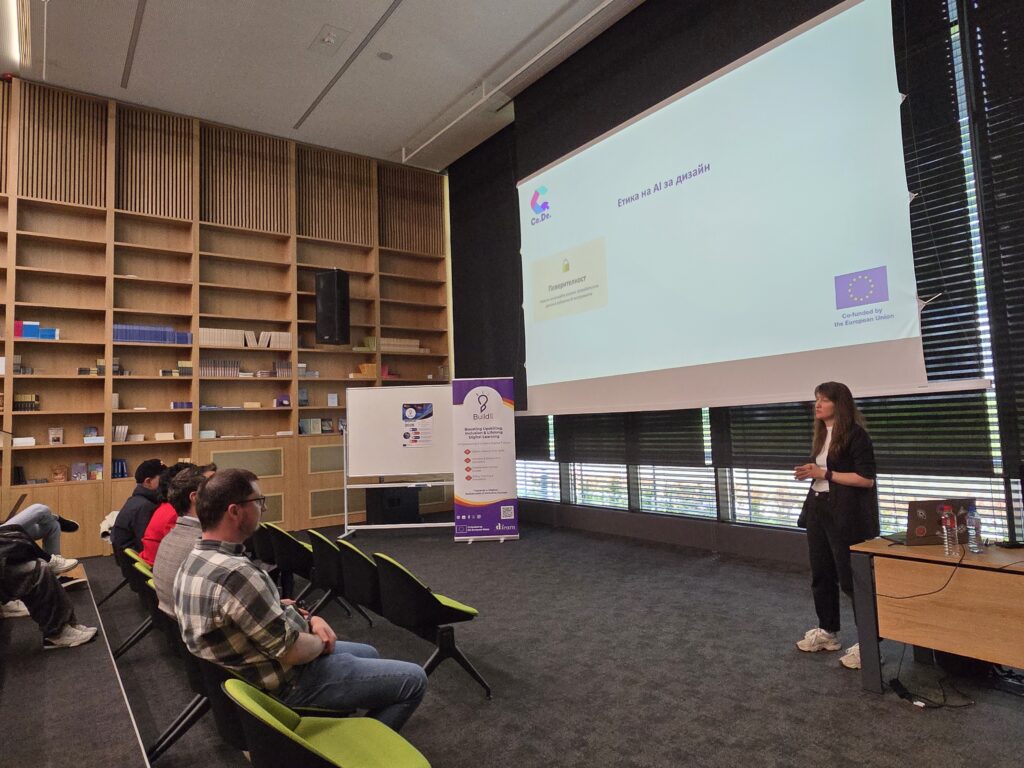
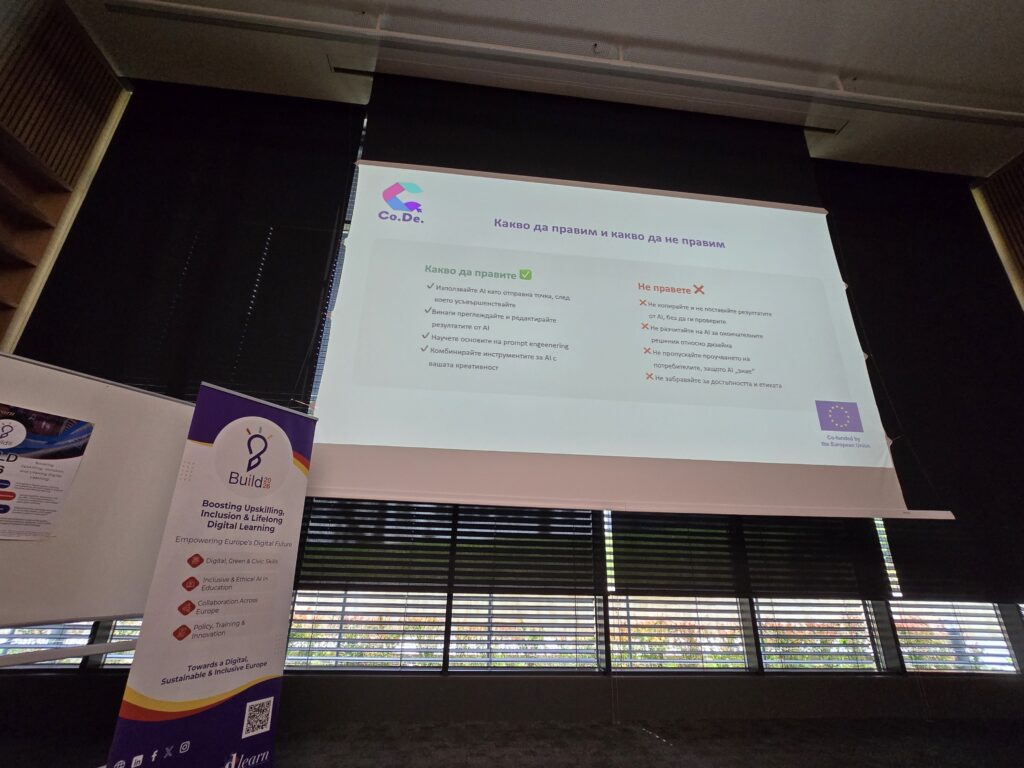
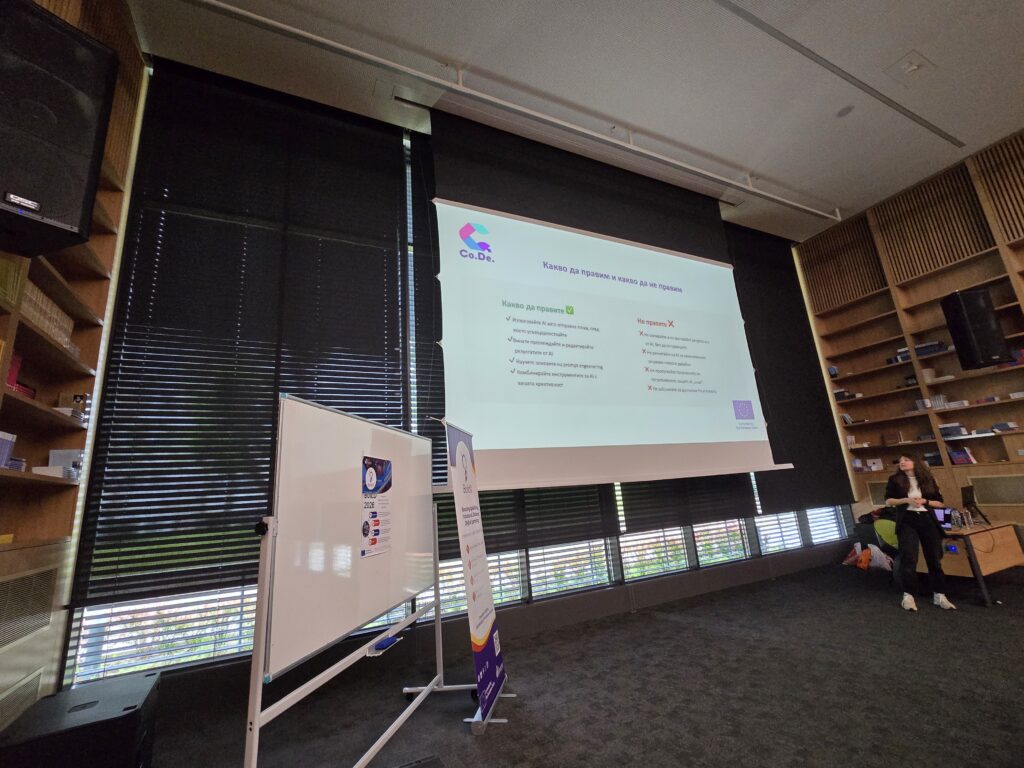
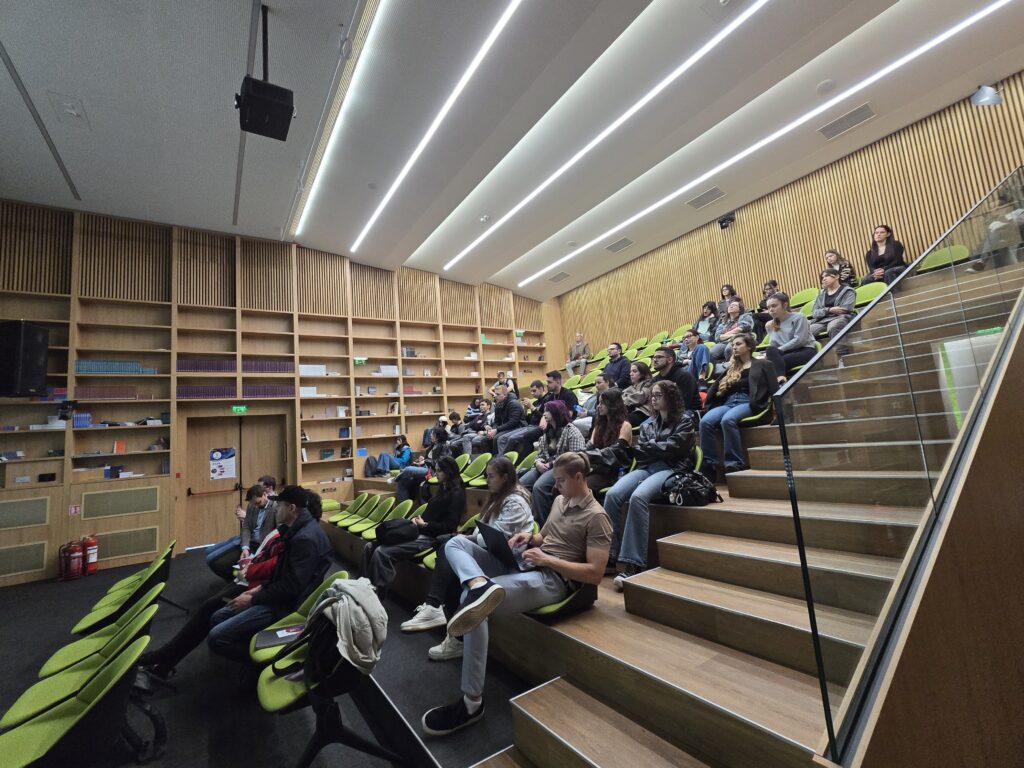
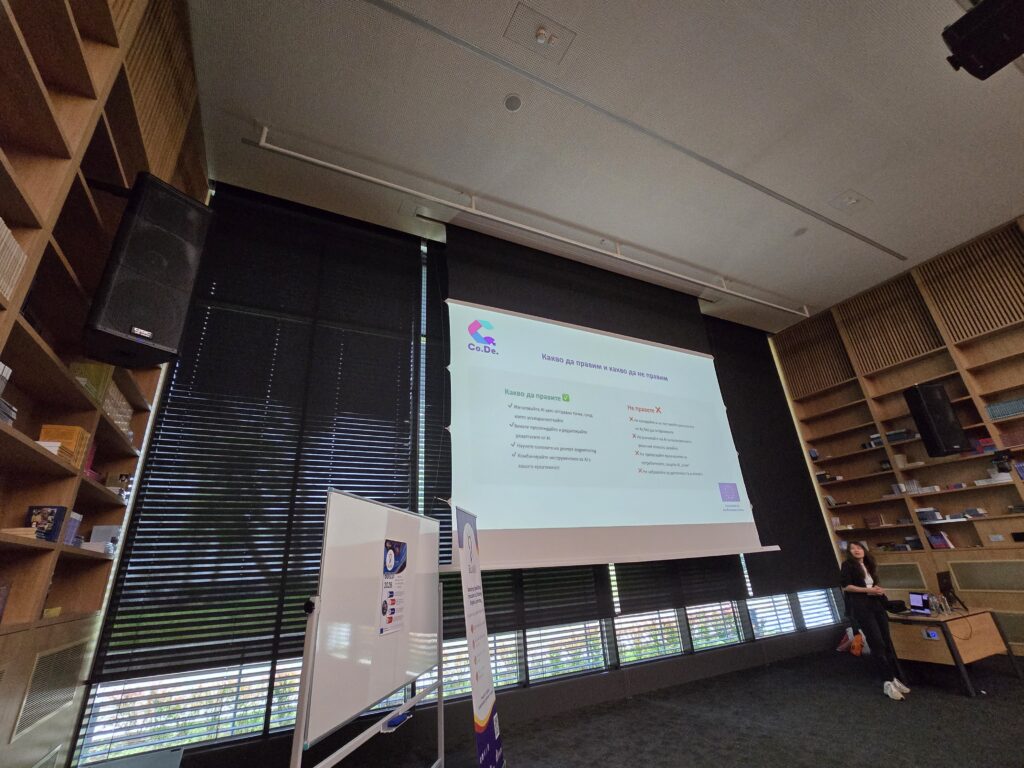
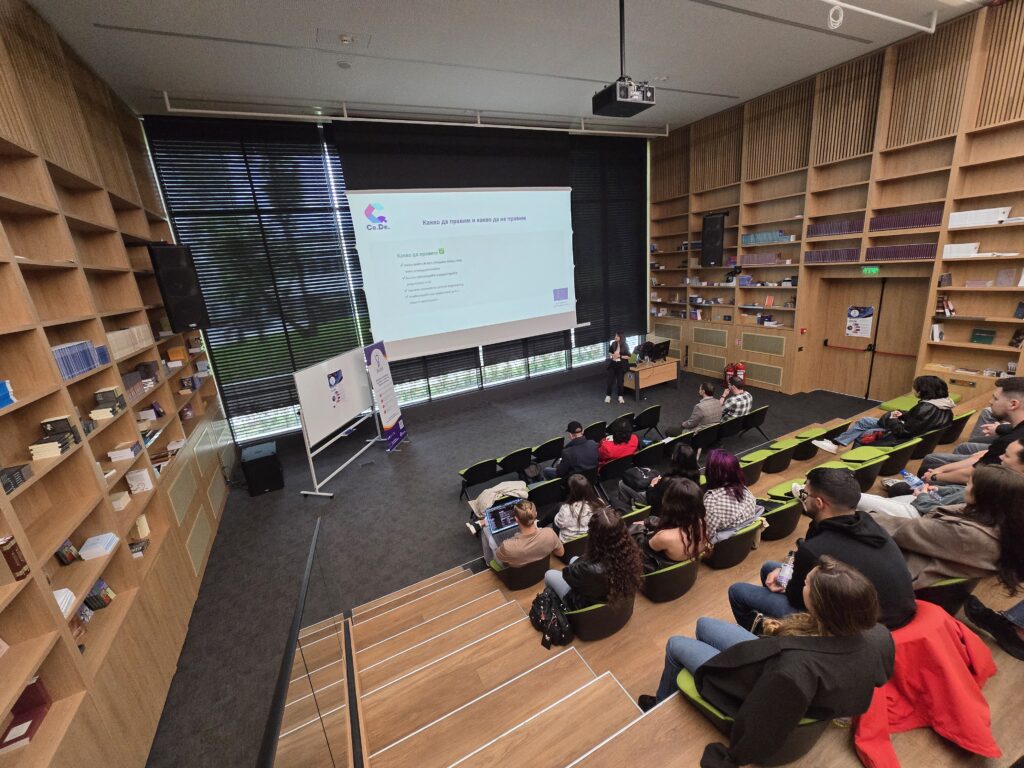
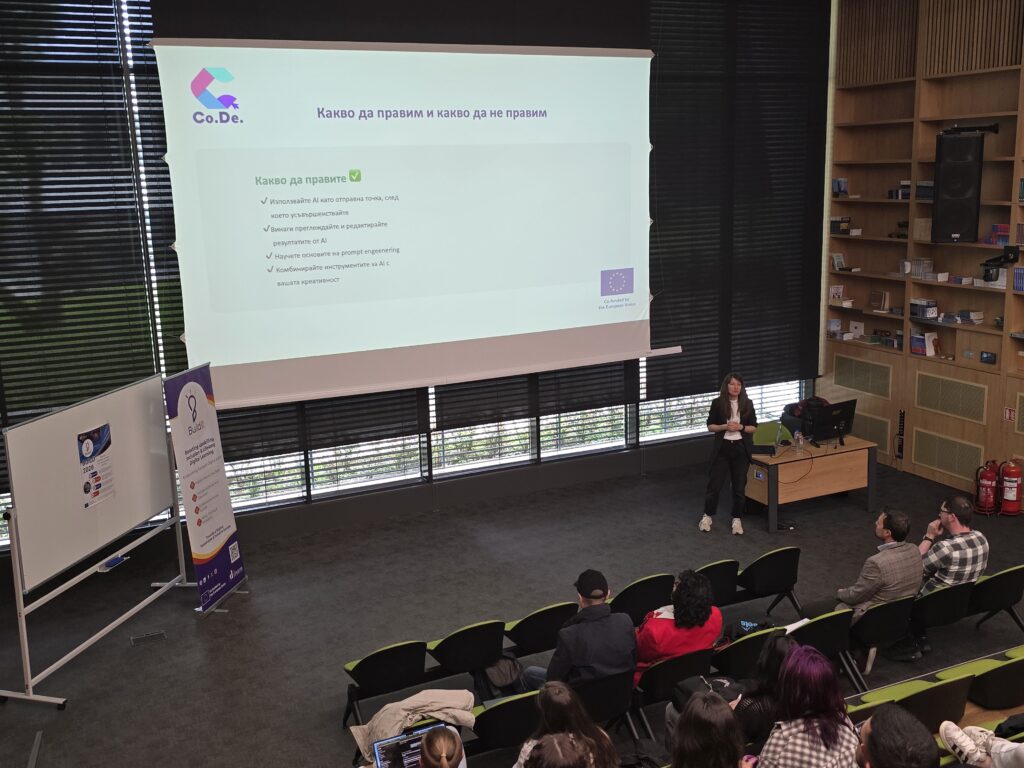
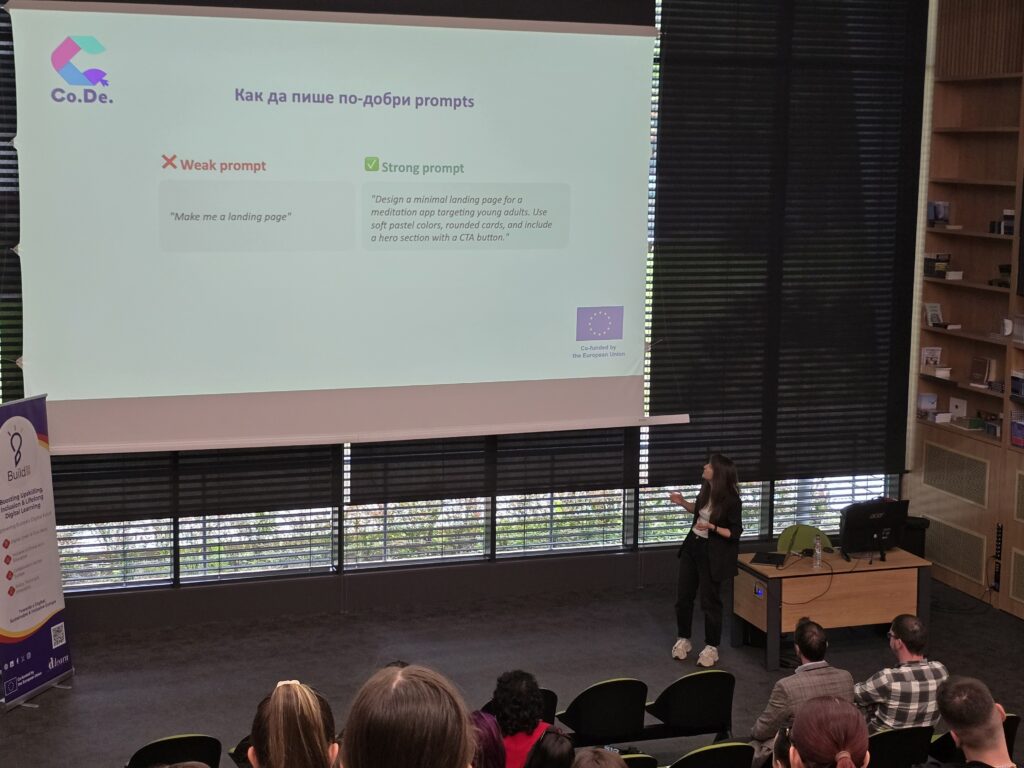
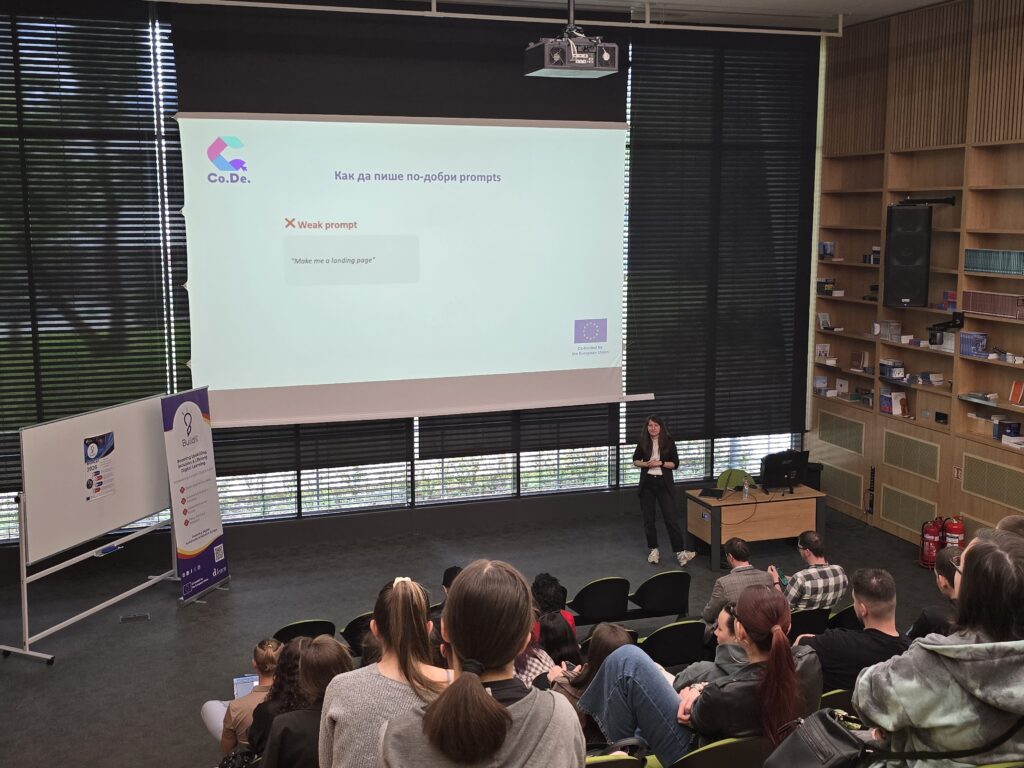

The event attracted 51 participants, significantly exceeding the project target of 30 participants for each National Conference. This represents 170% achievement of the planned participation target and demonstrates the strong interest in the Co.De. methodology, its educational resources and, in particular, the innovative Moodle-based Co.De. Toolkit.
The conference brought together teachers, academics, education professionals, digital-learning and design specialists, representatives of educational organisations and stakeholders interested in the future of learner-centred and digitally supported education.
From European cooperation to tangible educational results
Taking place at the final stage of Co.De., the Bulgarian National Conference was designed not simply to introduce the project, but to demonstrate what the European partnership has achieved and how these results can continue to generate value after the project period.
The programme therefore connected three important dimensions: the pedagogical foundations developed through the project, the practical digital resources available to educators, and the long-term exploitation and sustainability of these results.
Participants were introduced to the achievements of WP2 – Co.De. 4 Teachers, including the work undertaken to strengthen teachers’ competences for multidisciplinary, co-design and learner-centred education.
A central focus was placed on WP3 and the Moodle-based Co.De. Toolkit, transforming the project’s pedagogical approach into an accessible digital environment for practical use by teachers and learners.
The Moodle-based Co.De. Toolkit at the centre of the conference
One of the main highlights of the National Conference was the presentation of the Moodle-based Co.De. Toolkit.
Rather than presenting the Toolkit simply as another project output, the conference demonstrated its role as a practical and sustainable digital gateway to the knowledge and educational resources produced by the Co.De. consortium.
Participants explored how the platform brings together pedagogical guidance, learning resources and co-design approaches within a familiar digital learning environment. The presentation demonstrated how teachers can access the resources and use them to support more participatory and learner-centred educational experiences.
This was particularly important at the end of the project. The Moodle-based approach provides a concrete pathway for moving from project development to continued educational use, helping ensure that Co.De. resources remain relevant and accessible beyond the formal implementation period.
Expert perspectives connecting education, design and European cooperation
The conference programme brought together speakers with complementary academic, educational, digital design and European cooperation expertise.
Assoc. Prof. Ilija Kozuharov, Dean Undergraduate Studies at New Bulgarian University, contributed to the discussion around learner-centred education and the importance of developing learning environments in which students take a more active role.
Chief Assistant Professor Yordan Karapenchev, Ph.D. addressed the importance of teacher competences in enabling innovative educational approaches and also moderated the policy-oriented discussion.
The digital dimension was further developed by Mrs. Keti Tserovska, M.A., Product Design at Marketo Logic Software AG, who connected the project’s results with principles of user-centred digital design. Concrete aspects such as accessibility, intuitive navigation and engagement were discussed in relation to the development of effective digital learning experiences.
Tsvetomir Budakov, President of Luxembourg Creative Lab a.s.b.l., contributed a European perspective, addressing cooperation, transferability and the sustainability of educational innovation beyond individual projects.
Together, these perspectives enabled the conference to connect pedagogy with technology, design and European cooperation rather than considering them as separate dimensions of educational innovation.
From project results to education policy
An important component of the five-hour programme was the Policy Makers Panel, which moved the conversation from presentation of project outputs towards their wider relevance for education.
The discussion focused on how innovative and learner-centred methodologies developed through European projects can be transferred into regular educational practice.
Among the concrete issues discussed were the need to strengthen teachers’ digital competences, opportunities for introducing co-design approaches into secondary-school education, and the challenge of ensuring that valuable digital educational resources continue to be available and used after European funding ends.
The panel therefore reinforced one of the central messages of the conference: successful European educational innovation should not conclude when a project formally ends. Its methodologies, tools and knowledge need to remain accessible and transferable to wider educational communities.
Q&A: Bringing Co.De. into classroom practice
The Q&A Panel – “From Co.De. Results to Classroom Practice” provided participants with an opportunity to move from strategic discussion to concrete educational implementation.
Teachers and stakeholders discussed questions such as how educators can begin working with the Moodle-based Toolkit, how Co.De. resources can complement existing teaching activities, and how co-design can enable students to participate more actively in shaping their own learning experiences.
This interaction was particularly valuable because it demonstrated interest not only in learning about the project, but also in using its results in practice.
The discussions showed that the combination of structured pedagogical resources and an accessible Moodle-based environment can help reduce the distance between innovative educational concepts and their actual implementation by teachers.
Extremely high participant satisfaction
Feedback collected following the event demonstrated an extremely high level of participant satisfaction.
The evaluation covered five dimensions of the conference:
| Evaluation area | Positive evaluation |
|---|---|
| Overall satisfaction with the National Conference | 98% |
| Relevance and quality of presentations and panel discussions | 96% |
| Usefulness and innovation of the Moodle-based Co.De. Toolkit | 98% |
| Practical applicability of Co.De. results in education | 94% |
| Organisation, networking and interaction opportunities | 96% |
The results are particularly encouraging regarding the project’s digital output. The 98% positive evaluation of the usefulness and innovation of the Moodle-based Toolkit demonstrates strong participant interest in a result designed to remain practically relevant beyond the project’s development phase.
Participants also valued the balance between expert presentations and interactive components. The Policy Makers Panel and Q&A session created space to address concrete issues of implementation, transferability and sustainability rather than limiting the event to one-way dissemination.
Building sustainability beyond the end of Co.De.
The timing of the National Conference was particularly significant.
As Co.De. approaches the end of its formal project period, the focus increasingly shifts from developing outputs towards ensuring their exploitation, transferability and sustainability.
The Bulgarian conference supported this transition by presenting completed results to a broader national audience, demonstrating the Moodle-based Toolkit, encouraging educators to engage with the resources and opening a dialogue about how the methodology can continue to support teaching and learning.
In this sense, the conference represented more than a dissemination activity. It provided a bridge between project implementation and post-project impact.
The Moodle-based Toolkit has an important role within this strategy. By providing a digital environment where project knowledge and resources can remain accessible, it supports continued engagement with Co.De. beyond individual conferences, workshops or project meetings.
A successful final milestone for Co.De. in Bulgaria
The Bulgarian Final National Conference demonstrated the value of bringing together educational methodology, digital innovation, professional expertise and stakeholder dialogue within a single national event.
With 51 participants, 170% achievement of the participation target, very high satisfaction levels and particularly strong interest in the Moodle-based Toolkit, the conference provided a successful conclusion to an important phase of Co.De.’s activities in Bulgaria.
Budakov Films would like to express its appreciation to New Bulgarian University for hosting the conference, to all speakers and contributors for sharing their expertise, and especially to the teachers, education professionals and stakeholders whose active participation transformed the event into a meaningful exchange about the future of learner-centred digital education.
As the Co.De. project reaches its final stage, the objective is clear: the end of the funded project should not be the end of its impact.
The knowledge, methodology and digital resources created through Co.De. provide a foundation for continued experimentation, adoption and cooperation — helping teachers and learners turn co-design from a project concept into sustainable educational practice.
Funded by the European Union. Views and opinions expressed are however those of the author(s) only and do not necessarily reflect those of the European Union or the European Education and Culture Executive Agency (EACEA). Neither the European Union nor EACEA can be held responsible for them.
Project 2023-1-ES01-KA220-SCH-000154536